
Modern light therapy was pioneered in the late 1890s by Danish physician Niels Ryberg Finsen. His work treating cutaneous tuberculosis earned him a Nobel Prize in 1903. However, light therapy itself dates back to ancient Egypt, India, and Greece, where heliotherapy, meaning the use of natural sunlight, was used to treat various skin diseases.
Nowadays, light therapy has come a long way from what it once was. These advancements have led to LED light therapy masks that feature different wavelengths to target specific skin concerns. Today's blog will explore what each wavelength offers and why incorporating one into your wellness routine might be a useful addition to your skin routine. Then you’ll better understand why FOREO built the FAQ 202, FAQ 202 plus, 211, and 221 around eight of them.
How LED Light Therapy Wavelengths Work
The reason LED light therapy wavelengths work is that light interacts with your skin. It can do this because your cells can absorb specific wavelengths and respond to them in different ways.
Scientifically speaking, inside every cell sit the mitochondria, which are small structures that produce the energy your skin runs on and needs to repair itself. When red and near-infrared light reaches them, an enzyme called cytochrome c oxidase absorbs the light and helps increase energy production.
According to research, this is the primary mechanism behind photobiomodulation. Photobiomodulation is the technical term often used for this kind of low-level red and near-infrared light interaction with tissue. In recent years, dermatology experts say there is real evidence that red light therapy can change biology, including offering skin rejuvenation and hair growth. However, different wavelengths work differently, and it's important to understand the type of light you're using to determine how it fits your skincare goals.

Near-Infrared Light for Deeper Skin Support
The near-infrared wavelength penetrates deep into the skin, traveling past the surface and into the dermis, reaching the lower layer where collagen and elastin are produced. In FOREO’s FAQ LED masks, this wavelength sits at 850 nanometers.
At this depth, near-infrared light is intended to support collagen production and skin repair processes. It's also invisible light, so you won't see it glowing, since it sits just beyond the visible red. If you use FAQ masks, you can turn this light on in the FOREO app, and it will run beneath the other colors you can see.
Red Light for Fine Lines

Among the eight colors of some FAQ lights, red light has the most evidence supporting its ability to soften the appearance of fine lines. In FOREO’s FAQ LED masks, red light sits at 650 nanometers.
Red light is commonly used in anti-aging LED routines because it is associated with collagen-supportive skin processes and the appearance of smoother, firmer skin. In FOREO's third-party clinical trials, the FAQ 202 reduced the appearance of wrinkles by 32% in 2 weeks. FOREO also reports significant improvements in firmness and elasticity. However, everyone is different. This means outcomes can vary depending on how often you use LED light therapy masks and the other skincare you’re using in your current routine.
It's also worth knowing that red light is often the best starting point for LED therapy. LED mask treatments are generally designed to be gentle, non-ablative, and repeatable, rather than relying on peeling, scrubbing, or surface injury.
Blue Light for Clearing Acne

In the United States, acne is the most common skin condition. It's known to affect up to 50 million Americans every year. Although acne primarily affects individuals between the ages of 12 and 24 (85%), it also affects adults. Additionally, about 20% of people with acne develop severe inflammatory or nodular forms.
So, although it isn’t considered a serious healthcare condition, acne is prevalent, and if you have it, it's understandable that you may want to address it.
Of course, specialized skincare formulations are available, but blue light therapy can also help. Blue light is used for blemish care because it can interact with porphyrins produced by acne-related bacteria. That interaction can help reduce acne-causing bacteria on the skin, which is why blue LED is commonly used for mild-to-moderate inflammatory acne.
In FOREO’s FAQ LED masks, blue light sits at 465 nanometers, so it remains closer to the surface where acne forms. FOREO's testing on the FAQ 202 mask reported a 48% drop in acne and an 18% drop in sebum over two weeks, which shows how blue and red can work together. With these types of masks, you can target breakouts while also supporting the look of calmer, healthier skin.

The Other Five Colors Briefly Explained
Blue, red, and invisible near-infrared are the three primary wavelengths in LED light therapy, but they aren’t the only colors. FOREO’s eight-wavelength FAQ masks also include green, orange, cyan, purple, and yellow. These other wavelengths help fill the gaps that the three primary colors don’t address.
For example, green light at 520 nm is intended to brighten dull skin and even skin tone. Orange light at 600 nm is intended to improve skin texture. Purple light at 440 nm is intended to improve the appearance of hyperpigmentation. Cyan light at 485 nm is intended to calm stressed skin, and yellow light at 580 nm is intended to reduce the appearance of redness.
These colors do not have the same depth of evidence as red, blue, and near-infrared light. FOREO also notes that green, orange, purple, cyan, and yellow light are not intended to have a medical effect. Still, they can add useful cosmetic support when alternated as part of a consistent LED routine.
| Color | Wavelength | Intended Use |
|---|---|---|
| NIR | 850 nm | Stimulate collagen production and support repair of damaged skin cells. |
| Red | 650 nm | Improve the appearance of wrinkles. |
| Blue | 465 nm | Improve the appearance of mild-to-moderate inflammatory acne. |
| Green | 520 nm | Brighten dull skin and even skin tone. |
| Orange | 600 nm | Improve skin texture. |
| Yellow | 580 nm | Reduce the appearance of redness. |
| Purple | 440 nm | Improve hyperpigmentation. |
| Cyan | 485 nm | Calm stressed skin. |
Same Eight Wavelengths, Different Uses
The FAQ 202, FAQ 202 plus, FAQ 211, and FAQ 221 are at-home LED therapy masks that all feature eight wavelengths, but they target different areas and levels of coverage.
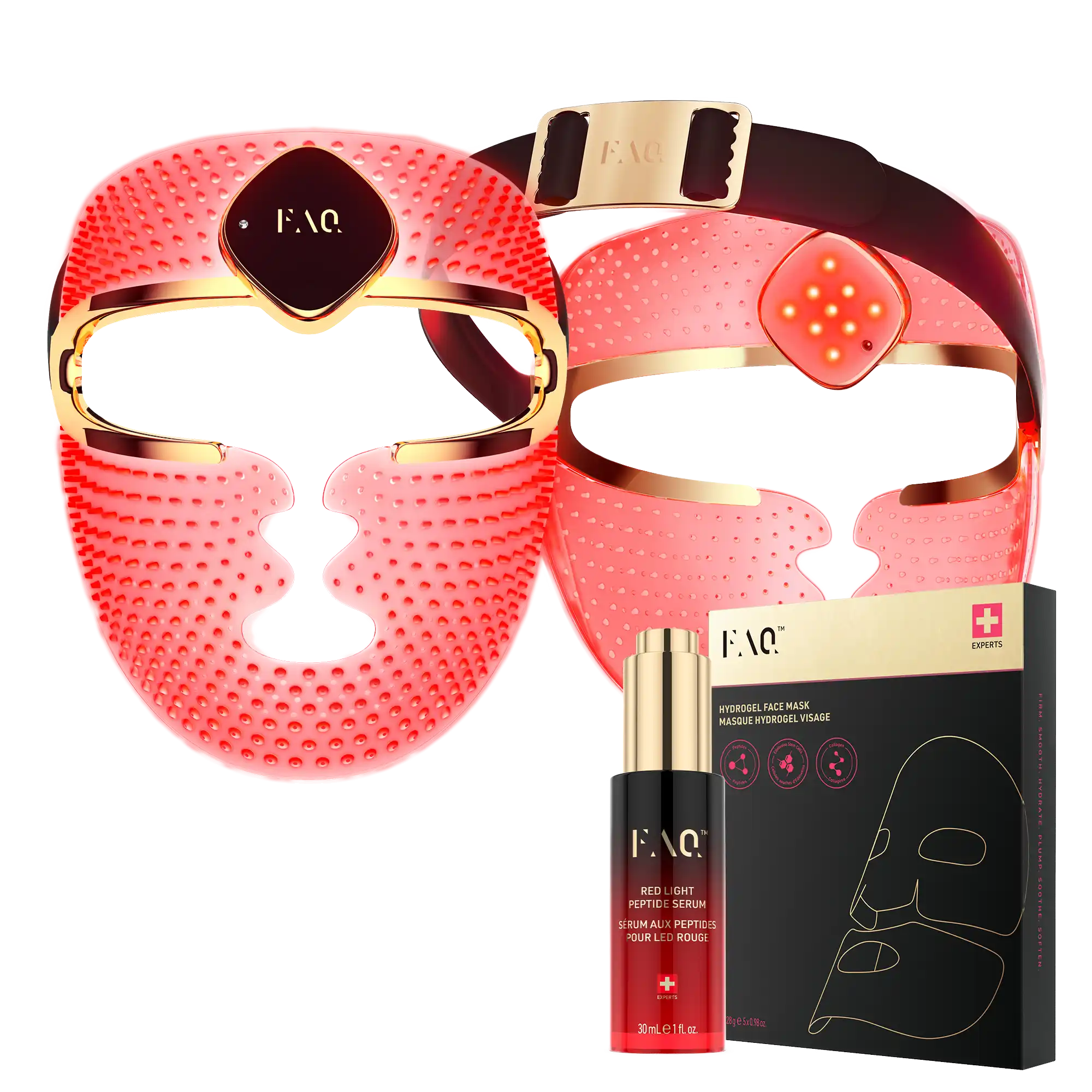
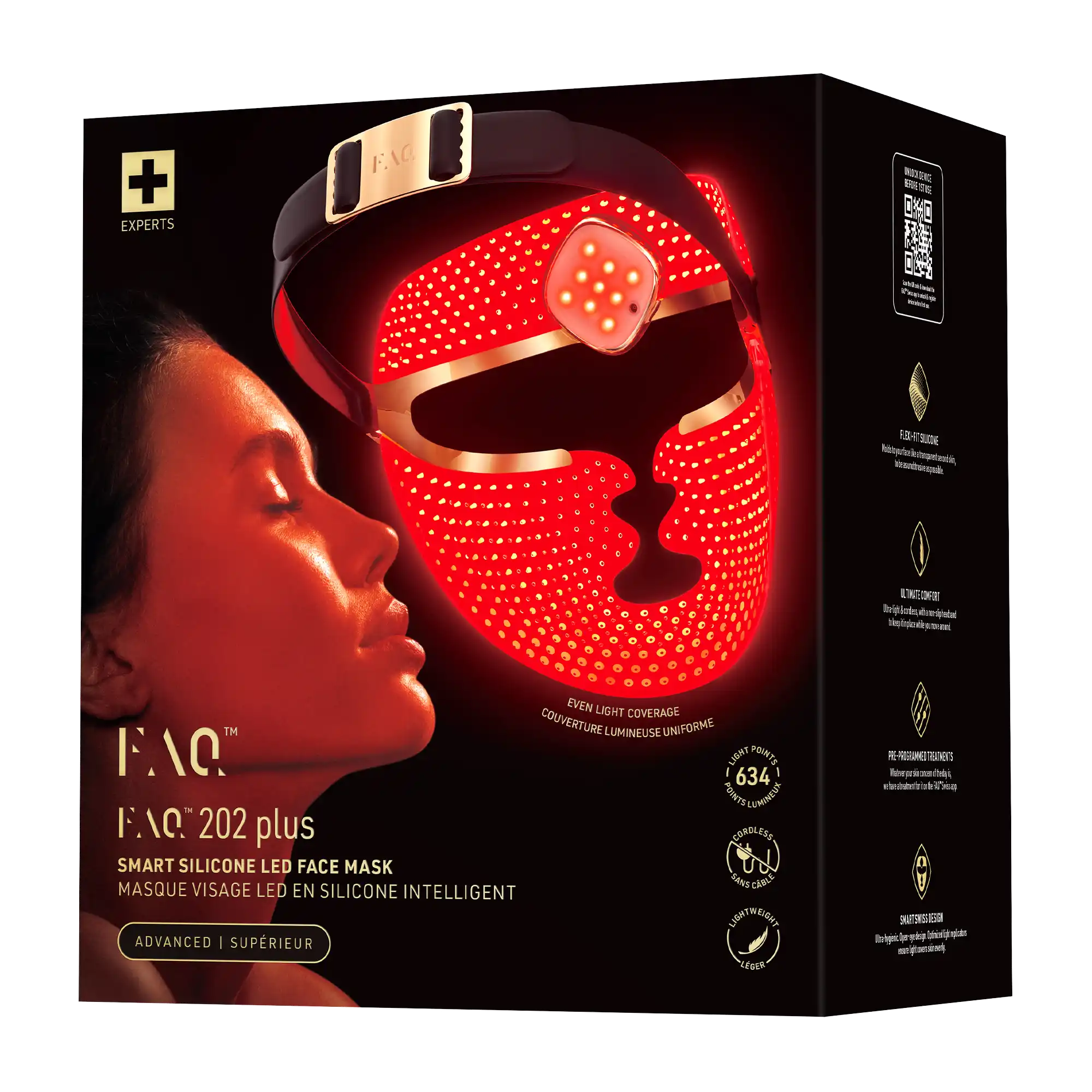
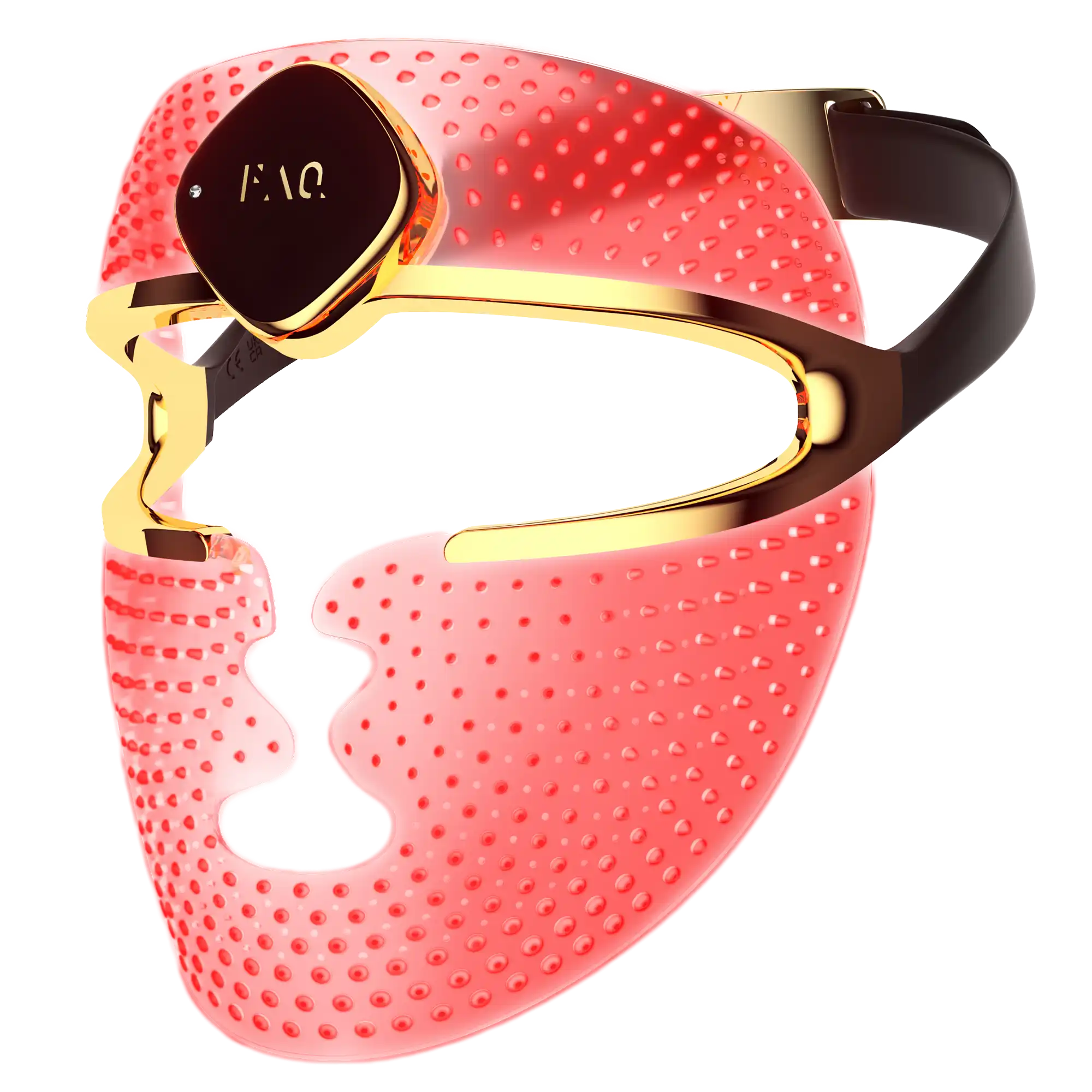
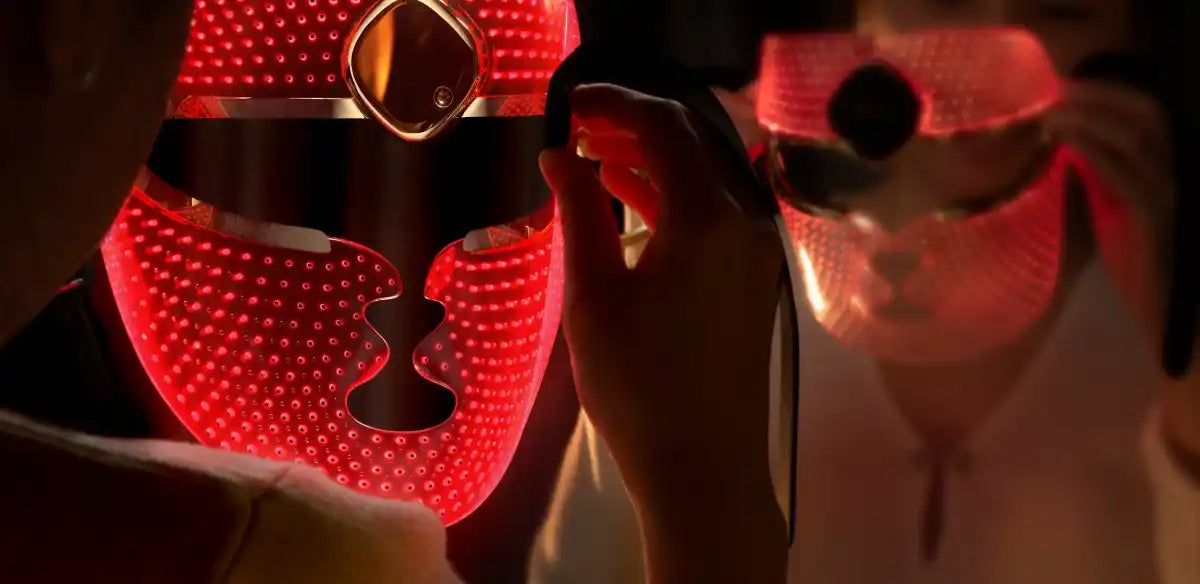
For example, the FAQ 202 face mask wraps 600 points of light around your facial contours. The FAQ 202 plus builds on that design with 634 LED light points, additional forehead LEDs, and 50% higher light intensity for shoppers who want the upgraded face-mask option.
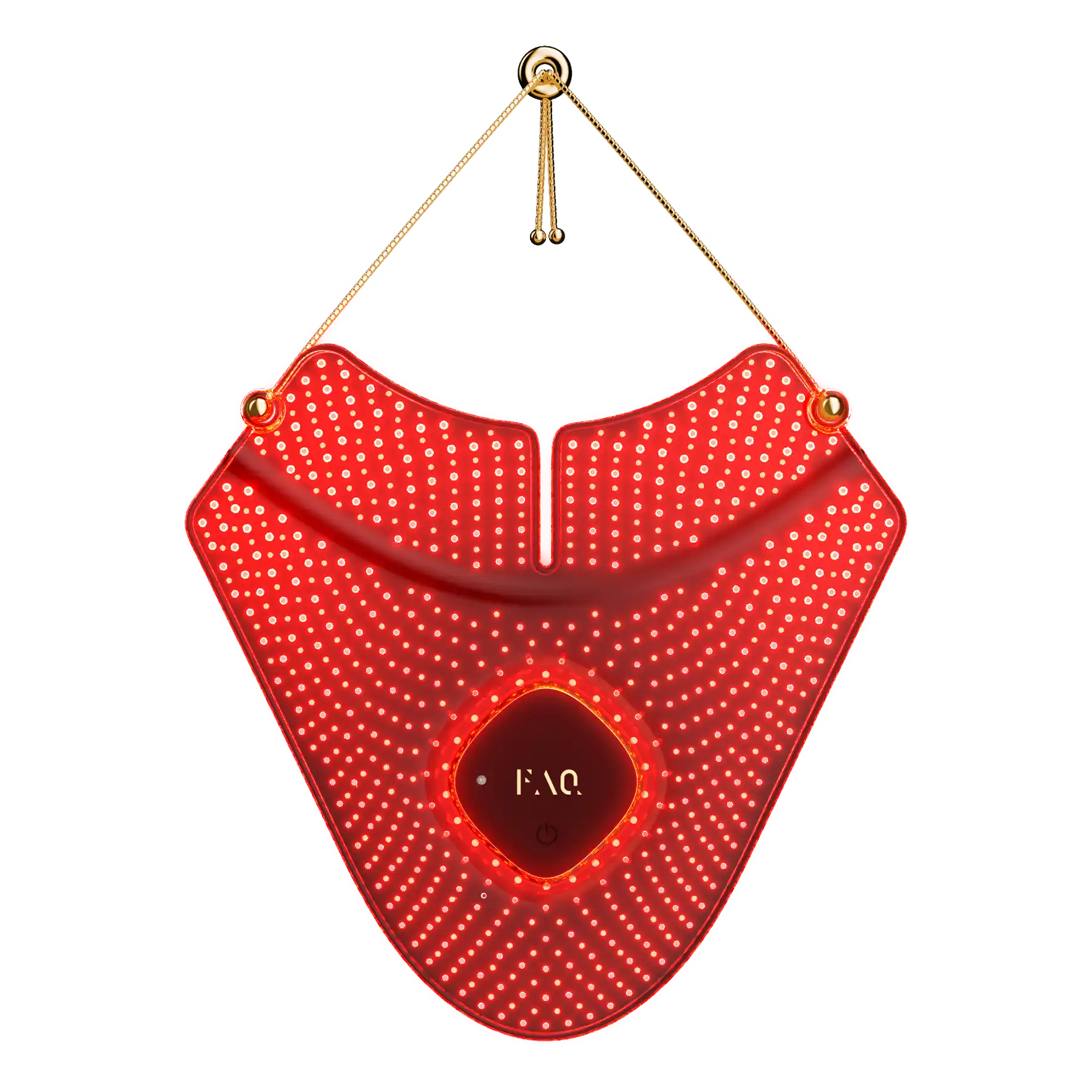
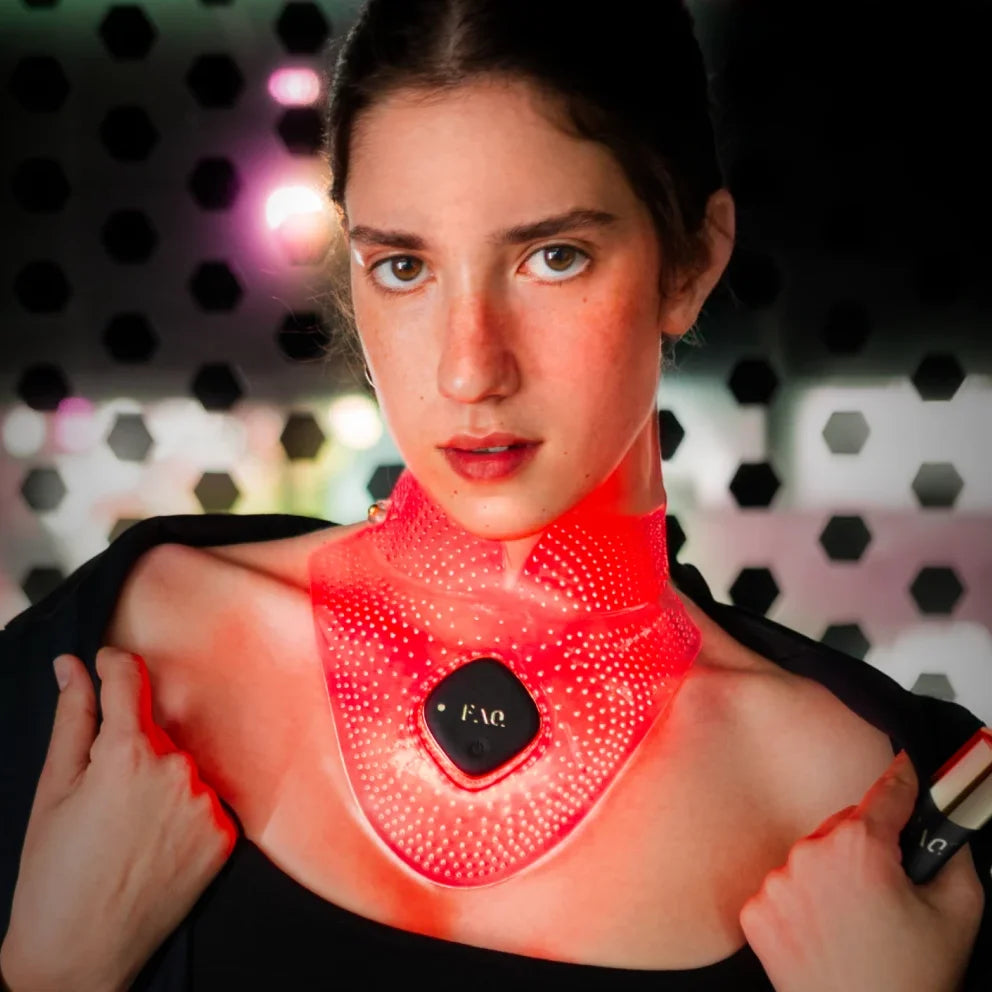
On the other hand, the FAQ 211 neck and décolleté mask targets the areas that age fastest and are most often skipped. It uses 761 optimized points of light and has a dual-wear design, so it can be worn on the front of the neck and décolleté or on the upper back for acne targeting.
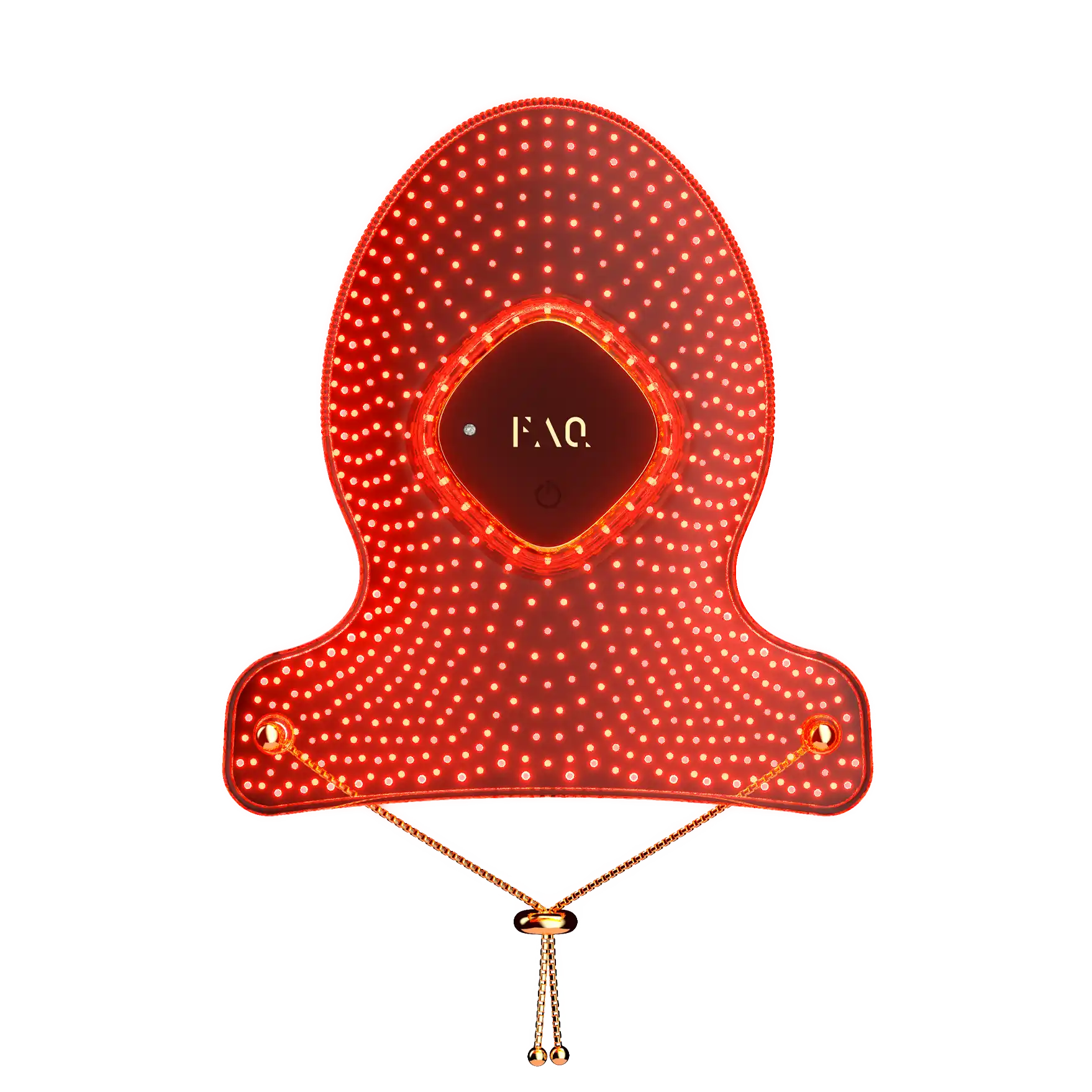
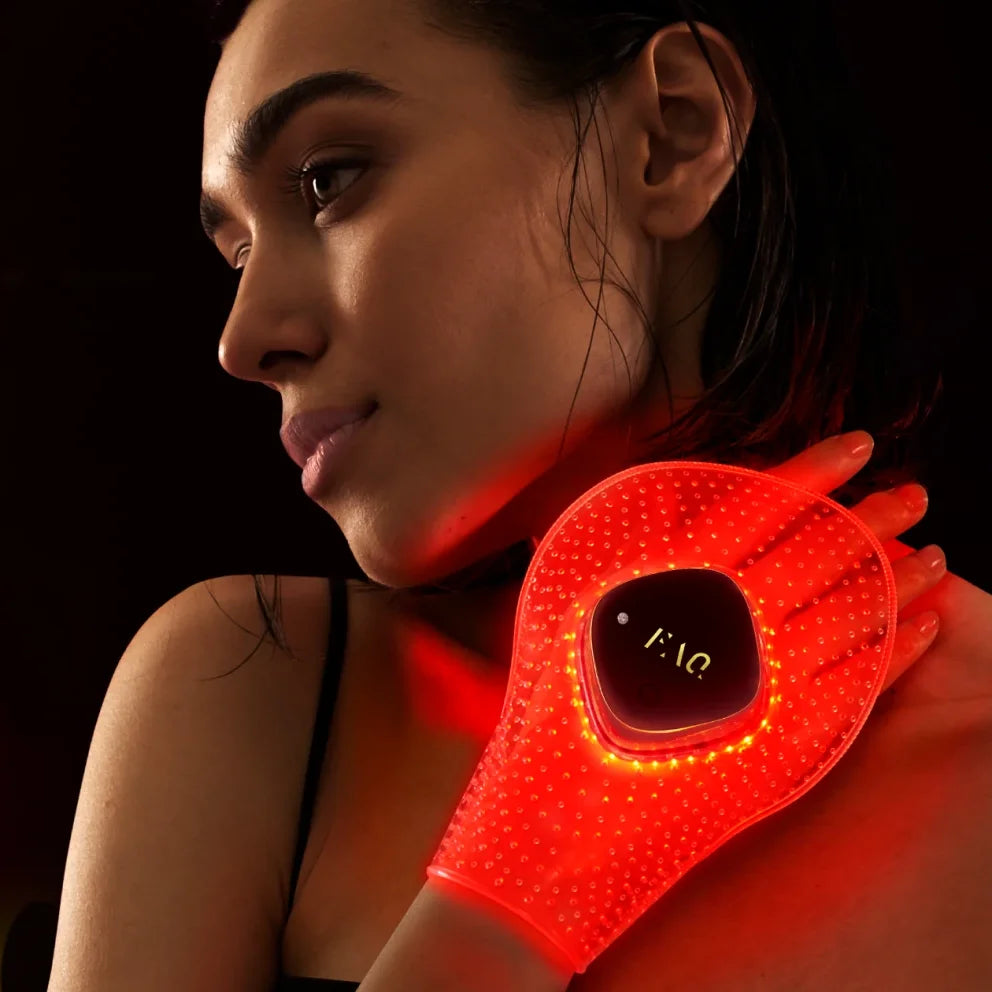
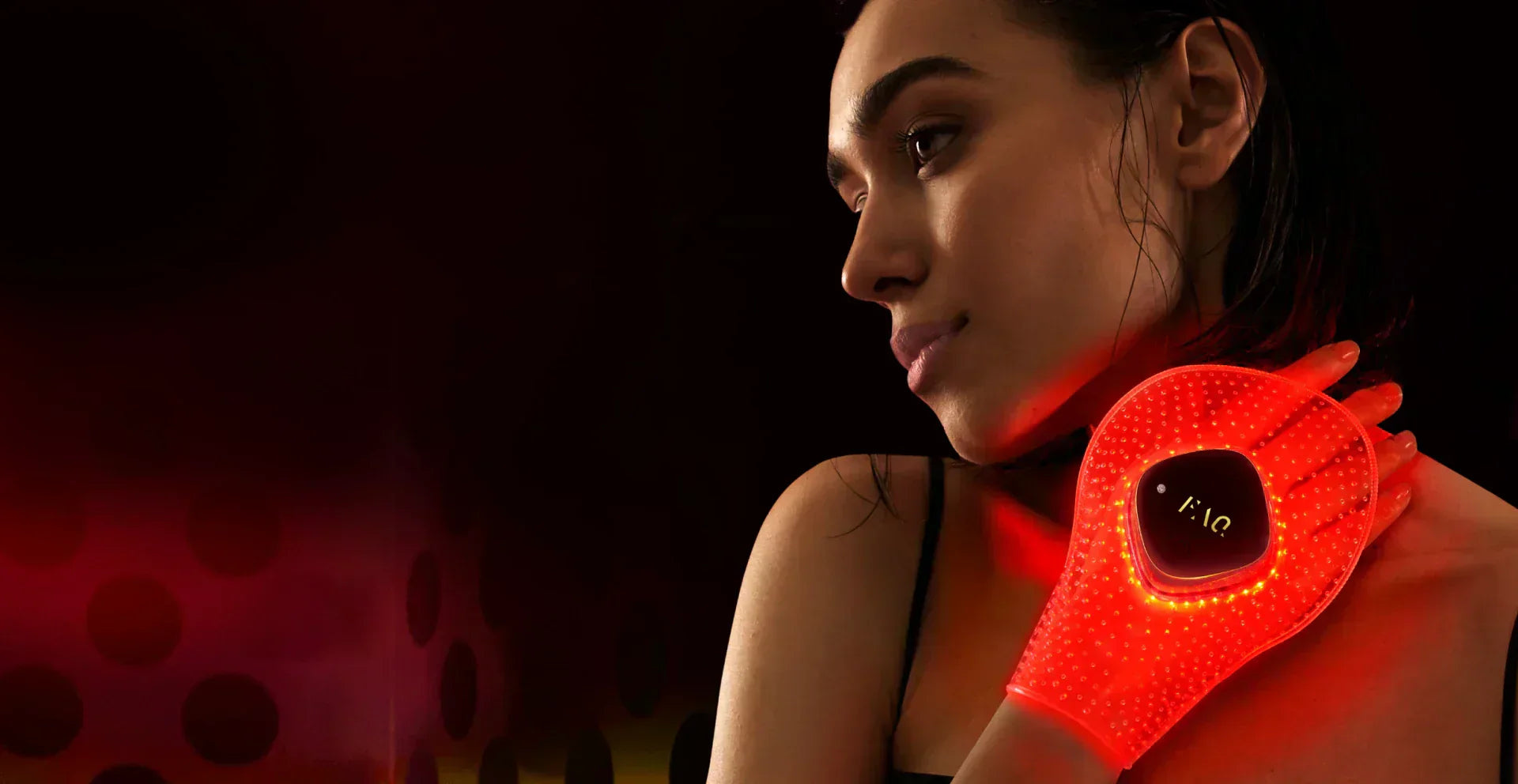
Then the FAQ 221 hand mask addresses the part of you that reveals your age the fastest, since hands are constantly exposed to the sun and washing. It uses 623 optimized points of light and is designed for wrinkles, fine lines, age spots, and crepey-looking skin on the hands.
With these targeting different areas of the body, the right choice depends on whether you want to focus on the face, upgrade the face routine, extend treatment to the neck and décolleté, or add targeted hand care.
Key Takeaways on LED Light Therapy Wavelengths
Now you know what each LED light therapy wavelength is intended to help with, and that there are at-home masks you can use by FOREO. In our opinion, at-home masks are generally designed for lower-intensity, repeatable use, and results reward consistency over intensity.
At ZenHaus Luxe, you can see how the FAQ 202, FAQ 202 plus, 211, and 221 sit alongside the rest of a routine in our Better Skin collection.