Article: Why Baseline Tracking Matters in a Wellness Routine
Why Baseline Tracking Matters in a Wellness Routine
A wellness routine usually starts with the right intentions. You want to sleep better, feel stronger, recover more consistently, improve hydration, or build healthier habits that actually last.
But before you change the routine, it helps to know your starting point.
That starting point is your baseline. Without it, progress can be hard to read. You may be doing the right things, but still be unsure whether your body is actually changing or simply fluctuating from day to day.
Baseline tracking gives those changes a point of reference. It shows where your body stands before new habits begin, so future changes are easier to interpret.
Instead of reacting to one reading on one day, you have a clearer way to see whether your routine is actually moving in the right direction.
If you are thinking about tracking as part of a broader at-home setup, our Complete Daily Routine page shows how baseline measurement can fit alongside recovery and restoration tools.
Why weight alone can be misleading
For many people, the default measure of progress is body weight. The problem is that weight alone is a narrow signal.
Body weight can move because of hydration, sodium intake, meal timing, sleep, training load, travel, or normal day-to-day variation.
Hydration is a good example. A standard scale can show a short-term change that is mostly fluid, not fat loss or muscle gain.
Body water data helps explain what that number is actually showing. Body water percentage shows hydration as a share of total body weight, while body water in liters gives a more direct view of fluid volume. Together, those measurements make daily scale changes easier to interpret.
Someone can also be making progress in ways that weight alone does not reflect. That is one reason many people move from a standard scale to a smart scale that offers broader body composition context. A person may be building strength, improving body composition, or creating a healthier recovery rhythm while seeing very little dramatic movement on a standard scale. Just as easily, someone can see weight go down without improving the underlying measurements that matter most.

What body composition tracking can reveal
A standard scale gives you one number. Body composition tracking breaks that number into more useful pieces.
Instead of only showing total weight, it can show changes in muscle, fat, hydration, and metabolism. Those measurements make it easier to see what is changing beneath the surface.
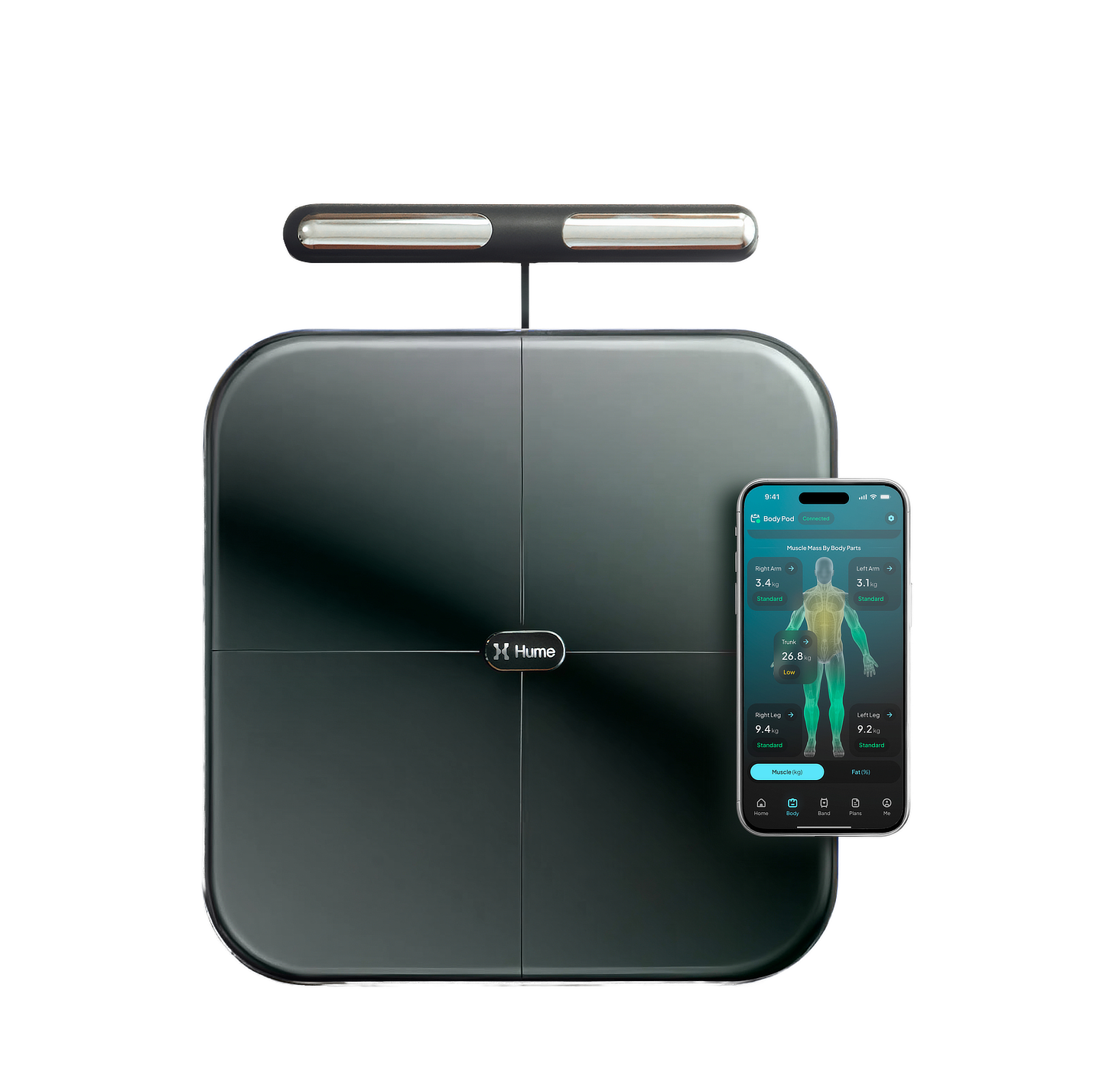
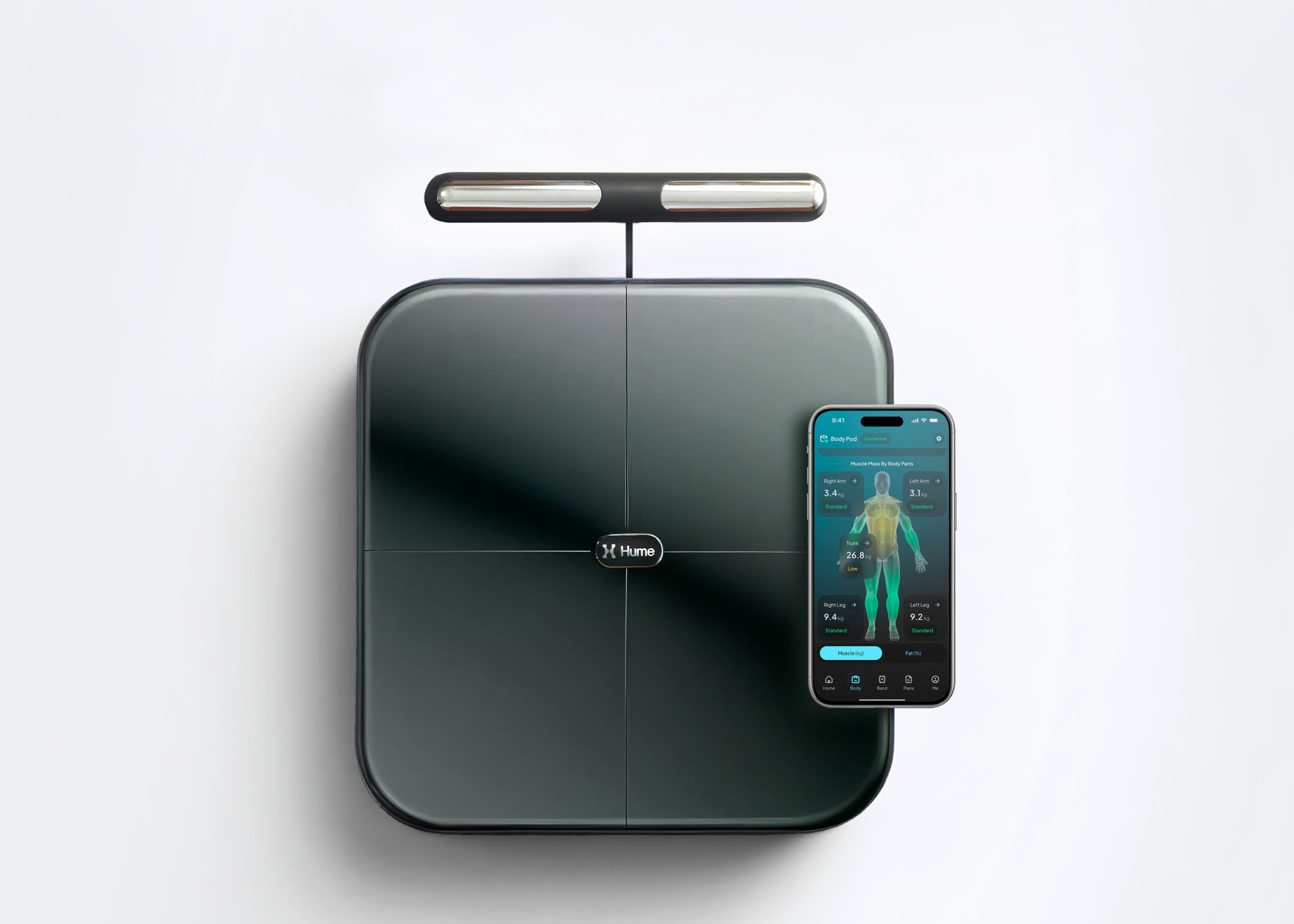
Muscle is one of the clearest examples. Hume tracks skeletal muscle mass and skeletal muscle mass percentage. Skeletal muscle mass estimates the amount of muscle tied to movement, strength, and daily function, while skeletal muscle percentage shows how much of total body composition that muscle represents.
That matters because someone can build or maintain muscle while seeing little change in total body weight.
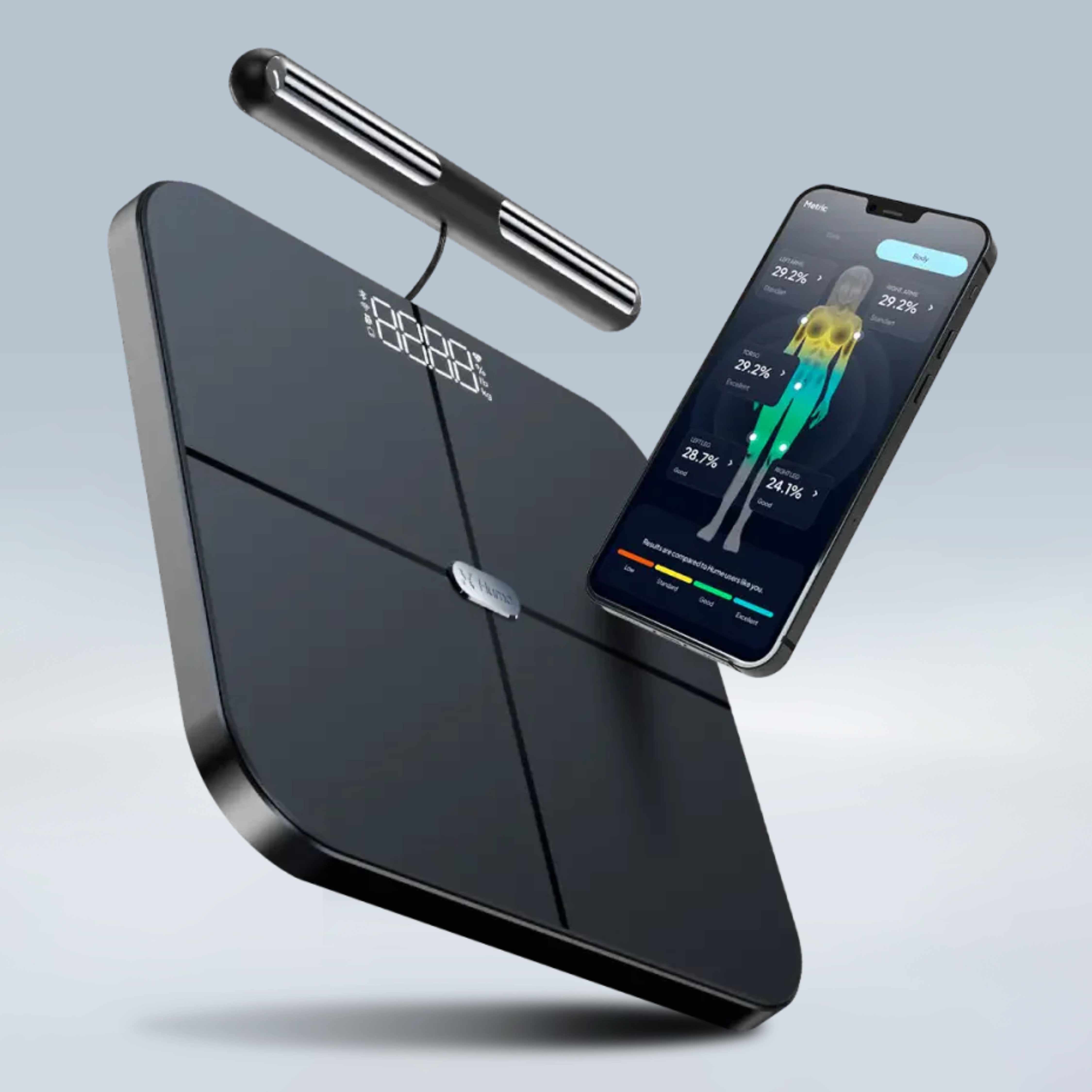
Fat is another example. Total body fat shows the larger trend, while visceral fat gives a more specific view of fat stored around the internal organs. Two people can have similar body weight and very different body composition patterns, which is why fat distribution matters more than scale weight alone.
A better baseline helps move the question away from “Did my weight change?” and toward something more useful: what is actually changing, and is my routine moving me in the right direction?
That can be especially useful in a Recovery Support routine, where weight alone may not show what is changing.
Where the Hume Body Pod fits
This is where the Hume Body Pod fits into a home wellness routine.
Rather than acting as a basic scale, the Hume Body Pod is built around body composition tracking. It gives users more than body weight alone, including measurements related to muscle, fat, hydration, and metabolism, which is where broader wellness tracking becomes useful.
That matters when the goal is not just to weigh less, but to understand what is changing. A routine focused on strength, hydration, recovery, or long-term consistency needs more than a single number can provide.
The point is not to collect more numbers for their own sake. The point is to make the routine easier to read.
With more than one number to look at, daily fluctuations are less likely to throw you off. A flat weigh-in may still come with changes in muscle, hydration, or fat distribution. The routine becomes easier to trust because you are no longer judging everything by one reading on one day.

Why this matters in a long-term routine

At-home wellness works best when the routine is realistic enough to repeat and clear enough to trust.
That does not mean measuring everything all the time. It means checking the right signals consistently enough to see patterns. A useful baseline can show when something is improving, when something is stalling, and when the routine may need to change.
A person who begins resistance training may gain strength and improve skeletal muscle without dramatic movement on the scale. Someone prioritizing hydration, sleep, and recovery may begin seeing better trends before obvious visual change appears. Someone trying to improve body composition may benefit from seeing not just fat levels, but also how fat is distributed and how their broader metabolic picture is changing over time.
The same principle applies to routines built more around rest and restoration, which is why baseline tracking can also pair well with our Sleep & Restoration approach.
Hume also includes measurements such as BMR and metabolic age. BMR estimates how much energy the body uses at rest, while metabolic age gives a simplified comparison based on body composition and related inputs. These are not standalone judgments of health, but they can add useful context when viewed as trends over time.
A better starting point
Baseline tracking does not make a routine work on its own. But it can make a good routine easier to understand.
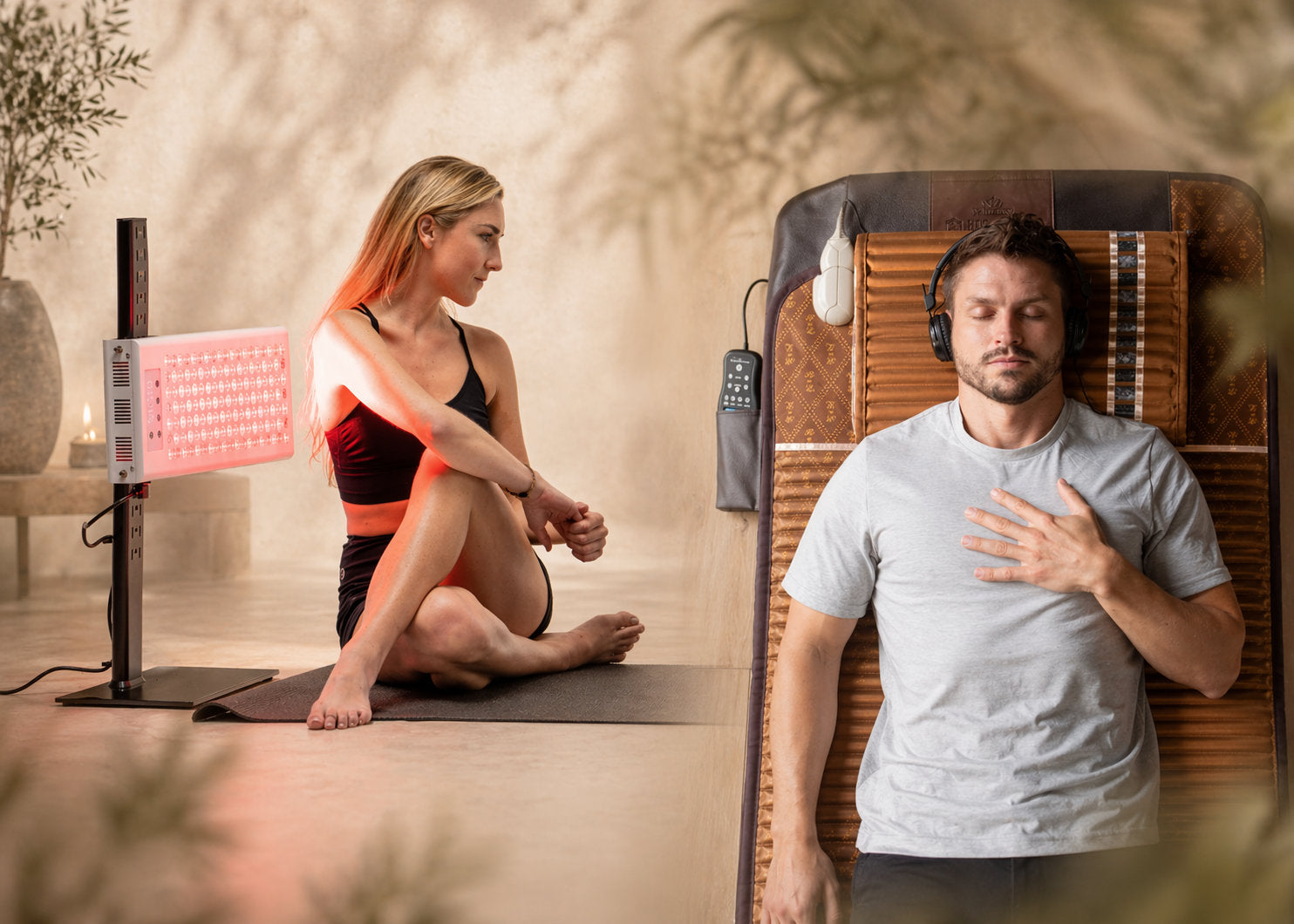
If your routine includes red light and near-infrared therapy, baseline tracking can help you follow the larger pattern instead of judging each session in isolation. For more on how those two wavelengths work together, read Red Light and Near-Infrared Light: Why the Combination Matters.
Real progress is often less dramatic than people expect. More often, it is a series of smaller shifts that build over time. The clearer your starting point, the easier it is to tell what is actually changing and what is just noise.
If you want your wellness routine to feel less like guesswork, start by knowing what you are measuring from.